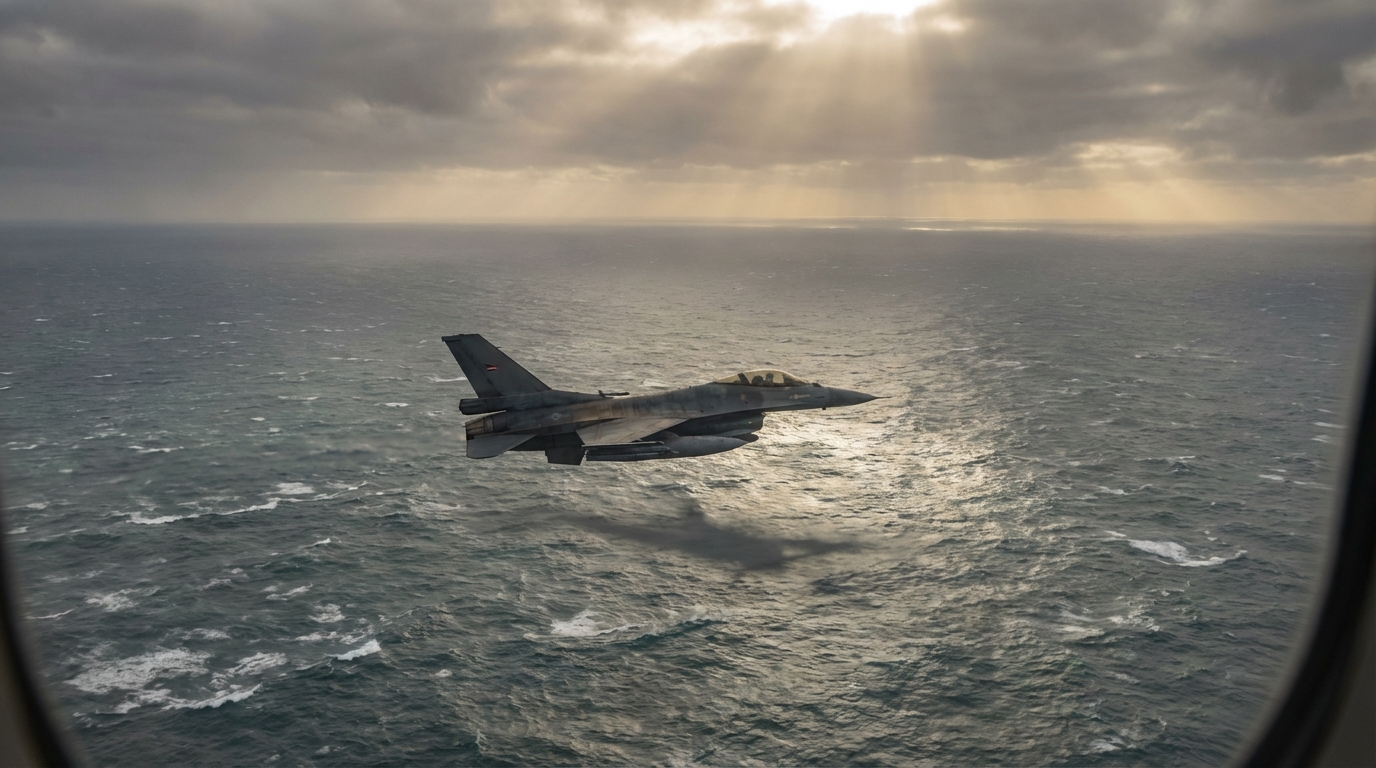
The development of advanced military aircraft continues to reshape the balance of power in global defense strategies. China's latest fighter jet initiative represents a significant leap forward in capabilities designed specifically for modern naval combat scenarios. The testing phase of this cutting-edge platform signals a new era of technological sophistication in maritime air operations.
Understanding the J-36 Fighter Program
China's aerospace industry has been rapidly advancing its combat aircraft designs over the past decade. The J-36 emerges as a particularly noteworthy development, combining stealth characteristics with enhanced sensor systems tailored for naval operations. This fighter jet represents years of research and engineering focused on addressing the specific challenges of maritime warfare.
The program reflects broader strategic objectives within the Chinese military establishment. Rather than simply replicating existing designs, the J-36 incorporates innovative features that address gaps in current naval air defense capabilities. The focus on naval-specific applications distinguishes this platform from other fighter development initiatives.
Key Technology Being Tested
Advanced Radar and Sensor Integration
The most significant aspect of the current testing phase involves sophisticated radar systems and sensor fusion technology. These components work together to detect, track, and engage maritime targets at extended ranges. The integration of multiple sensor types creates a comprehensive picture of the operational environment, enabling pilots to make informed decisions rapidly.
The radar systems being evaluated can operate in various modes, from long-range detection to precision targeting. This versatility proves essential in naval environments where targets may be dispersed across vast ocean areas. The sensor fusion capabilities allow the aircraft to simultaneously process information from multiple sources, reducing reaction times and improving targeting accuracy.
Anti-Ship Missile Capabilities
A core element of the testing program focuses on anti-ship missile integration and deployment. Modern naval warfare increasingly relies on standoff weapons that allow aircraft to engage surface vessels from safe distances. The J-36's compatibility with advanced anti-ship missiles represents a substantial upgrade to existing naval air capabilities.
These weapons systems can engage targets at ranges exceeding one hundred kilometers, fundamentally changing tactical considerations for naval operations. The ability to launch multiple missiles in coordinated strikes enhances the effectiveness of maritime air operations. Testing ensures that the aircraft can reliably deploy these weapons while maintaining flight stability and control.
Strategic Implications for Naval Warfare
Changing the Naval Balance
The emergence of advanced naval air capabilities influences the strategic calculus of maritime powers. Aircraft equipped with long-range anti-ship missiles can threaten surface vessels from positions that traditional naval defenses struggle to counter. The J-36's development signals an emphasis on projecting power across extended ocean distances.
This technological shift has profound implications for naval strategy and force composition. Traditional battleship-centric navies give way to air-centric operational concepts. Nations must now invest in air defense systems capable of detecting and intercepting aircraft at greater distances and altitudes.
Integration with Broader Military Systems
The J-36 fighter jet does not operate in isolation but rather functions as part of an integrated military ecosystem. The aircraft connects with surface vessels, submarines, and ground-based radar systems through advanced data-linking capabilities. This network-centric approach multiplies the effectiveness of individual platforms.
The fighter's role within broader command and control systems proves as important as its individual capabilities. Real-time intelligence sharing between platforms enables coordinated operations that would be impossible for isolated units. Testing validates these integration points and ensures seamless communication across different military branches.
Technological Challenges and Solutions
Stealth and Detection Avoidance
Designing a fighter jet that combines stealth characteristics with the aerodynamic requirements for naval operations presents significant engineering challenges. The J-36's designers had to balance reduced radar cross-section with the need for adequate fuel capacity and payload capability for maritime missions.
The aircraft employs shape optimization, radar-absorbing materials, and advanced design techniques to minimize detectability. These features work in conjunction with electronic warfare systems that can jam or deceive enemy radar. The testing phase evaluates how effectively these stealth measures perform against realistic threat scenarios.
Extended Range and Endurance
Naval operations often require aircraft to operate far from friendly airbases. The J-36 incorporates design features that extend its operational range while maintaining combat effectiveness. Fuel efficiency improvements and optimized aerodynamics allow longer mission durations without sacrificing performance.
In-flight refueling capability further extends the aircraft's reach, enabling it to conduct operations across vast ocean areas. Testing validates that the refueling systems function reliably and that the aircraft maintains adequate control authority during these critical operations.
Comparative Analysis with Other Naval Fighters
Several nations operate advanced naval fighters, and the J-36 represents a competitive response to existing platforms. The United States Navy operates the F/A-18 Super Hornet, while other nations field various aircraft designed for maritime operations. The J-36's development reflects efforts to match or exceed the capabilities of these established systems.
Comparing specific performance metrics reveals the J-36's strengths and areas where existing platforms maintain advantages. The testing program focuses on validating that the new aircraft meets or exceeds performance benchmarks established by operational experience with existing naval fighters.
Future Development and Deployment Timeline
The current testing phase represents a critical juncture in the J-36's development cycle. Successful validation of key systems and capabilities will determine the timeline for operational deployment. Military planners are likely monitoring the testing results closely to understand when this platform might enter service.
The transition from testing to operational deployment typically requires several years of additional work. Pilots must train extensively on the new platform, maintenance procedures must be refined, and supply chains must be established. The full integration of the J-36 into naval air operations will be a gradual process spanning multiple years.
Broader Context of Military Innovation
The J-36 testing program reflects the rapid pace of military technological advancement globally. Nations recognize that air superiority and maritime dominance increasingly depend on advanced aircraft capabilities. Investment in next-generation fighters remains a priority for major military powers.
This competitive dynamic drives innovation across the defense industry. Manufacturers and military research institutions push the boundaries of what is technically possible, resulting in platforms that would have seemed like science fiction just decades ago. The J-36 exemplifies this trend of continuous technological improvement.
The testing of advanced naval warfare technology in the J-36 fighter jet demonstrates China's commitment to developing world-class military capabilities. The aircraft's sophisticated sensor systems, anti-ship missile integration, and stealth characteristics position it as a significant player in modern naval air operations. As testing continues and the platform moves toward operational deployment, the implications for regional and global maritime security will become increasingly apparent. The development of such advanced systems underscores the ongoing evolution of military technology and the strategic importance nations place on maintaining technological superiority in critical domains like naval warfare.