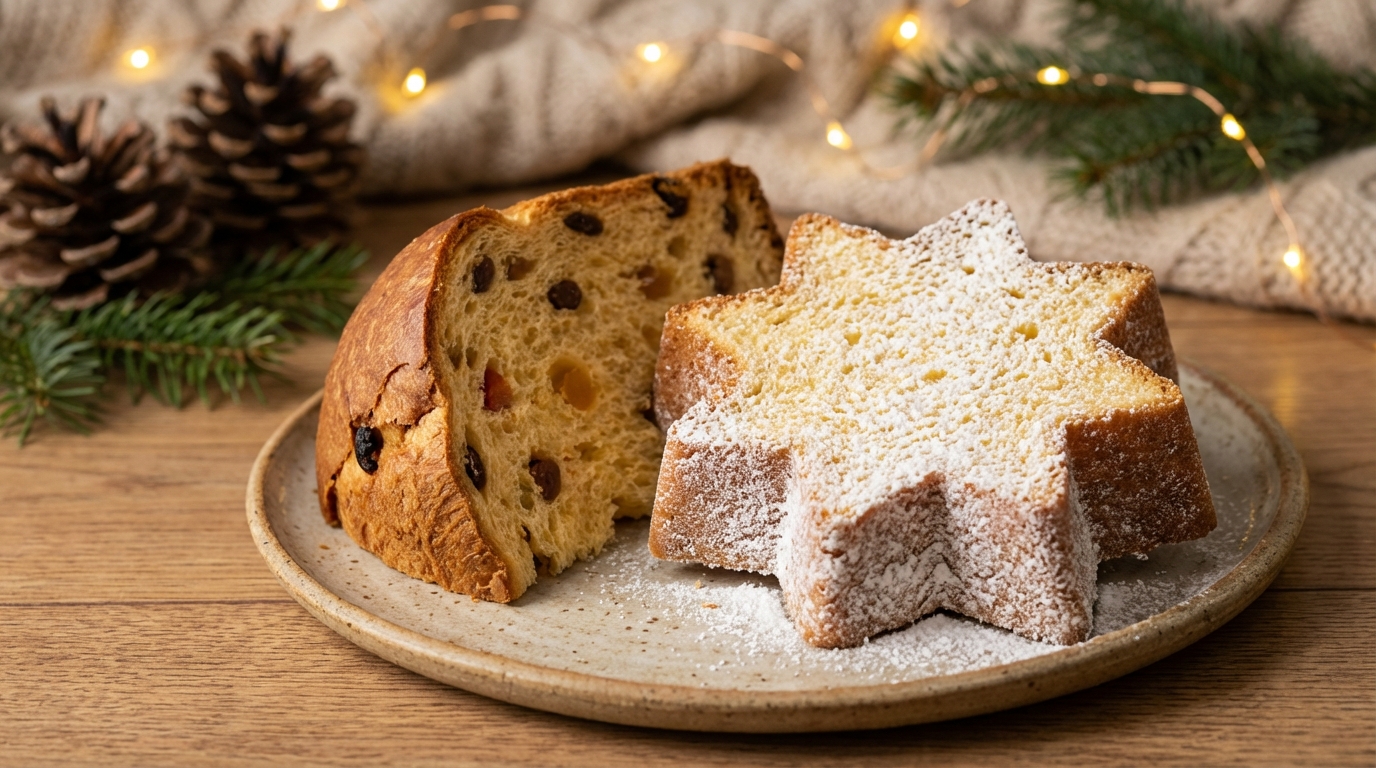
When December arrives and festive decorations start appearing in shop windows, Italian bakeries showcase two iconic sweet breads that have become synonymous with holiday celebrations: panettone and pandoro. While both are traditional Italian treats that grace holiday tables, many people assume they're variations of the same cake. The truth is, these two delicacies have distinct differences in their ingredients, history, preparation methods, and flavor profiles that make each one special in its own right.
The Origins: A Tale of Two Italian Traditions
Understanding the difference between panettone and pandoro begins with knowing their fascinating histories. Panettone hails from Milan in the Lombardy region and dates back to at least the 15th century. According to legend, a young nobleman fell in love with a baker's daughter and wanted to impress her family. He created a rich, fruit-filled bread that became so popular it eventually took the name "panettone" (from the Milanese word "panet," meaning bread).
Pandoro, on the other hand, comes from Verona in the Veneto region and has a slightly shorter documented history, though it's believed to date back to the Renaissance. The name literally means "golden bread" in Italian, referring to its distinctive yellow color and luxurious appearance. While panettone became a Milan specialty, pandoro established itself as Verona's pride and remains deeply connected to that city's culinary identity.
Key Ingredient Differences
The most obvious difference between these two treats lies in what goes into them. This is where the distinction becomes crystal clear.
Panettone's Composition:
- Contains candied fruits and dried fruits (typically raisins, candied orange peel, and candied citron)
- Made with butter, eggs, flour, and sugar
- Often includes vanilla and sometimes a touch of rum or other liqueurs
- The fruit content gives it a distinctly speckled appearance
- Denser and heavier in texture
Pandoro's Composition:
- Contains no fruits or candied pieces whatsoever
- Made with butter, eggs, flour, sugar, and vanilla
- Lighter, more delicate ingredient list
- Characterized by its pale golden color
- Airier and more cake-like in texture
This fundamental difference in ingredients creates two entirely different eating experiences. Panettone offers bursts of fruity sweetness with every bite, while pandoro provides a more subtle, buttery vanilla flavor that lets the cake's delicate crumb structure shine.
The Texture and Structure
Beyond ingredients, the texture of these two breads differs significantly. Panettone is known for its dense, moist crumb that holds together well. The fruits and their juices contribute to this structure, and the cake actually improves with age, becoming more flavorful over several days. Many Italians prefer to eat panettone after it's been sitting for a few days to allow the flavors to meld.
Pandoro, by contrast, is noticeably lighter and fluffier. Its structure resembles a traditional cake more than a bread, with an almost cloud-like texture. This delicate crumb comes from careful mixing and the use of a starter dough called "lievito madre" (mother yeast). The lightness of pandoro makes it feel less heavy on the palate, which some people prefer, especially if they're not fans of dense, fruit-filled cakes.
Preparation Methods and Complexity
The baking process for these two treats reveals why panettone commands premium prices and requires such specialized skill.
Panettone Production:
- Uses a complex, multi-day fermentation process
- Requires multiple folding stages to incorporate butter and eggs
- The dough must rest between folds to develop flavor
- Baking time is longer (around 50-60 minutes)
- Cooling process is crucial and takes several hours
- Requires precise temperature control throughout
Pandoro Production:
- Simpler fermentation process, though still requiring skill
- Fewer folding stages than panettone
- Shorter overall preparation time
- Baking time is typically 30-40 minutes
- Cooling is faster
- More forgiving for home bakers attempting to recreate it
This is why artisanal panettone often costs more than pandoro. The extended fermentation and multiple folding stages demand expertise and time, making it a labor-intensive product that justifies its premium price tag.
Flavor Profiles and Taste Experience
When you bite into panettone, you experience layers of flavor. The candied fruits provide sweetness and a slight bitter note, the raisins add depth, and the buttery dough creates richness. Some versions include a hint of vanilla, orange zest, or even a touch of liqueur. The overall experience is complex and indulgent.
Pandoro offers a cleaner, more straightforward taste. The emphasis is on the quality of the butter and the subtle vanilla notes. Because there are no fruits competing for attention, you can truly appreciate the skill of the baker in creating such a light, airy crumb. This simplicity appeals to those who prefer elegance over complexity.
Regional Loyalty and Traditions
In Italy, there's a friendly rivalry between panettone and pandoro lovers. Milan residents are fiercely loyal to panettone, while Veronese citizens champion pandoro. This regional pride means that in different parts of Italy, one will be more commonly found than the other during the holiday season.
Interestingly, some Italian families have strong preferences based on tradition. Older generations who grew up with one variety often remain devoted to it, passing their preferences to younger family members. This cultural attachment means that the panettone vs. pandoro debate isn't purely about taste for many Italians—it's about heritage and identity.
How to Enjoy Them
Both treats are traditionally enjoyed during the Christmas season, but they can be consumed in different ways.
Panettone is typically sliced and eaten as is, though some people enjoy it with a glass of sweet wine like Moscato d'Asti or even champagne. The dense texture means it holds up well to slicing and maintains its structure.
Pandoro is often dusted with powdered sugar, which adds to its visual appeal and provides additional sweetness. It can also be sliced and served with cream, chocolate sauce, or other toppings. Some people enjoy it toasted with a spread of jam or chocolate.
Making Your Choice
So which one should you choose? The answer depends entirely on your preferences. If you love fruits and complex flavors, panettone is your match. If you prefer lighter textures and subtle, delicate tastes, pandoro will delight you. Some people can't choose and enjoy both during the holiday season.
The beauty of these two Italian treasures is that they offer different pleasures. Rather than viewing them as competitors, consider them complementary options that bring variety to your festive table. Whether you're a panettone purist or a pandoro devotee, both deserve a place in your holiday celebrations. The real difference between them is simply a matter of what your palate craves during this special time of year.