What Research Shows About Exercise and Heart Health in Your 50s and Beyond
When you hit 50, your body sends clear signals that the fitness approach of your younger years needs an update. Your cardiovascular system changes, recovery takes longer, and what worked at 30 might actually increase your injury risk now. Yet most people still assume that walking or cycling are the gold standards for heart health at this stage of life.
Cardiologists have been quietly recommending something different for years, and recent research is finally catching up to validate what they've known all along. The ideal exercise for protecting your heart after 50 isn't what you'd expect, and it certainly isn't the low-intensity options everyone assumes are "safe" for older adults.
Why Walking and Cycling Fall Short
Don't misunderstand: walking and cycling are better than being sedentary. But they're not optimal for maintaining cardiovascular health as you age. Here's why cardiologists have concerns:
Walking's limitations:
- Provides minimal cardiovascular challenge after consistent practice
- Doesn't sufficiently stress the heart muscle to trigger beneficial adaptations
- Offers limited resistance training benefits for bone density and muscle mass
- Requires extended duration (45+ minutes) to achieve meaningful cardiovascular benefits
Cycling's shortcomings:
- Primarily works the lower body, leaving upper body muscles underdeveloped
- Doesn't engage your core effectively
- Can place stress on knees and lower back if form isn't perfect
- Offers less functional strength transfer to daily activities
The real issue is that both activities, while excellent for general movement, don't provide the intensity variation your heart needs to stay truly healthy. Your cardiovascular system adapts quickly to steady-state exercise, meaning you hit a plateau where additional benefits plateau dramatically.
What Cardiologists Are Actually Recommending
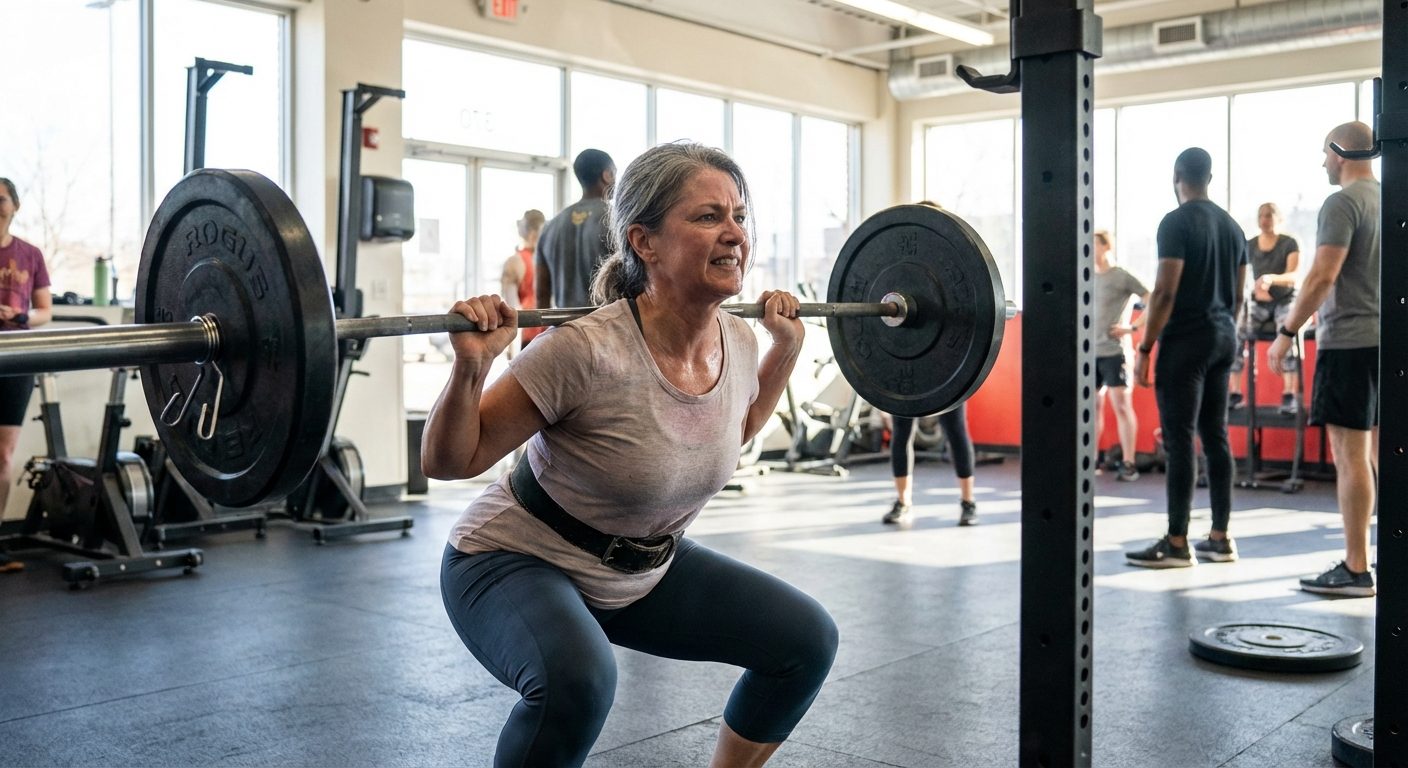
The exercise that consistently emerges from cardiological research and expert recommendations is resistance training combined with interval-based cardiovascular work. But not just any resistance training—specifically, strength training that incorporates compound movements and progressive overload.
This recommendation might surprise you because it contradicts the outdated belief that older adults should avoid "heavy" lifting. Modern cardiology research shows the opposite: controlled resistance exercise is one of the most powerful tools for maintaining heart health after 50.
The Science Behind Strength Training for Your Heart
When you engage in resistance training, several beneficial changes occur in your cardiovascular system:
- Improved arterial flexibility: Resistance exercise enhances endothelial function, the health of your blood vessel linings
- Better blood pressure regulation: Strength training reduces resting blood pressure more effectively than steady cardio alone
- Enhanced heart efficiency: Your heart becomes more efficient at pumping blood, reducing workload during daily activities
- Metabolic improvements: Building muscle mass improves insulin sensitivity and glucose metabolism, reducing heart disease risk factors
- Reduced inflammation: Regular resistance training lowers systemic inflammation linked to cardiovascular disease
The Ideal Exercise Protocol for Heart Health After 50
Cardiologists recommend a balanced approach that combines three elements:
1. Resistance Training (3 days per week)
Focus on compound movements that engage multiple muscle groups:
- Squats or leg presses
- Chest presses or push-ups (modified if needed)
- Rows or pull-ups
- Deadlifts or hip hinges
- Overhead presses
Start with weights you can control for 8-12 repetitions with proper form. The key is progressive overload: gradually increasing weight or reps over weeks and months.
2. High-Intensity Interval Training (1-2 days per week)
HIIT provides cardiovascular benefits that steady cardio cannot match:
- Alternate between intense effort (80-90% max heart rate) for 30-60 seconds
- Follow with recovery periods (50-60% max heart rate) for 90-120 seconds
- Complete 4-8 cycles per session
- This can be done on a stationary bike, treadmill, rowing machine, or even with bodyweight exercises
3. Active Recovery and Flexibility (2-3 days per week)
This is where walking and cycling become valuable:
- Low-intensity walking for 30-45 minutes
- Cycling at conversational pace
- Swimming or water aerobics
- Yoga or stretching routines
Making the Transition Safely
If you've been primarily walking or cycling, shifting to this new approach requires care:
Start gradually:
- Begin with light weights to learn proper form
- Consider working with a trainer for your first 4-6 weeks
- Increase intensity by no more than 10% per week
- Listen to your body and allow adequate recovery
Get medical clearance:
- Discuss any new exercise program with your cardiologist
- If you have existing heart conditions, ask for specific guidelines
- Consider a stress test before beginning intense training
Focus on form over weight:
- Poor form negates benefits and increases injury risk
- Controlled, deliberate movements beat heavy weight with sloppy technique
- Breathe steadily throughout each repetition
Addressing Common Concerns
"Isn't heavy lifting dangerous for my heart?"
No. When done properly, resistance training actually strengthens your cardiovascular system. The danger lies in sudden, uncontrolled movements or holding your breath during lifts. Proper breathing and progressive training eliminate these risks.
"What if I have arthritis or joint pain?"
Modified resistance training works perfectly. Water-based resistance, machines, or lighter weights with higher reps all provide cardiovascular benefits without excessive joint stress.
"How quickly will I see results?"
Heart health improvements begin within 2-3 weeks. Blood pressure improvements and better exercise tolerance typically appear within 4-6 weeks. More dramatic changes in cardiovascular fitness develop over 8-12 weeks.
The Bottom Line for Your Heart After 50
The ideal exercise for heart health after 50 combines resistance training, interval-based cardiovascular work, and active recovery. This approach provides superior cardiovascular benefits compared to walking or cycling alone, while also building the strength and muscle mass you need for functional independence and injury prevention.
Cardiologists recommend this protocol because it addresses the complete picture of heart health: improving arterial function, enhancing cardiac efficiency, regulating blood pressure, and reducing inflammation. It's not flashy, it's not trendy, and it requires more effort than a leisurely walk. But it's what the evidence consistently shows works best.
The good news? It's never too late to start. Even if you're 60, 70, or beyond, your cardiovascular system responds remarkably well to this type of training. Your heart is a muscle, and like all muscles, it thrives when appropriately challenged and given time to recover.