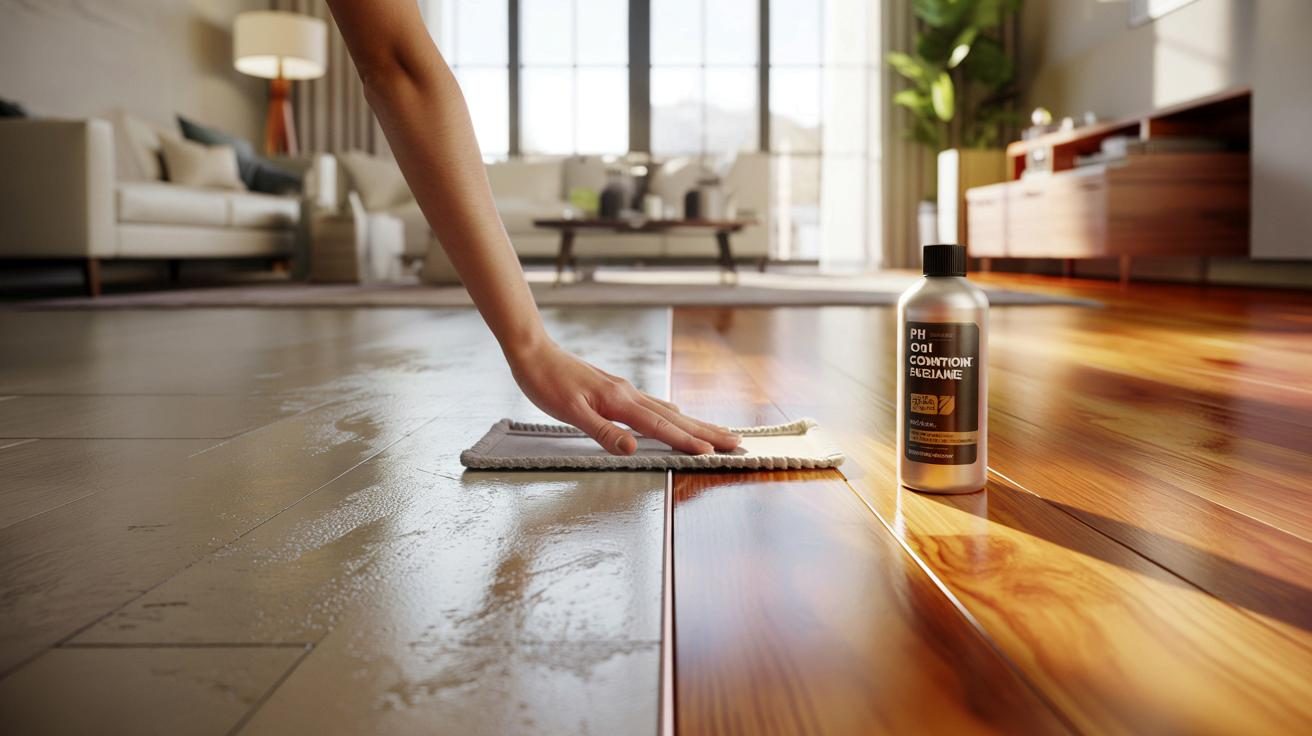
The first thing you notice is the dullness. Morning light slides across the living-room floor, and instead of a soft glow, you get a flat, tired reflection, broken by tiny scuffs and matte patches. You remember when those boards looked like a magazine spread, all honeyed sheen and depth. Somewhere between kids, pets, winter boots, and that one party with red wine, the shine just… left.
You’ve tried the “magic” cleaner from the supermarket, the old vinegar trick your aunt swears by, even a dab of wax in a corner. Sticky. Streaky. Underwhelming.
Then one day, a neighbor mentions a trick so simple you almost laugh. No vinegar. No wax. No expensive kit. Just a quiet change in how you treat what’s already there.
That’s when the floor starts looking back at you again.
No vinegar, no wax: the quiet secret of clean, hydrated wood
There’s a reason so many people end up disappointed after scrubbing their hardwood floors. They attack the surface like it’s a kitchen counter, armed with harsh products that smell “clean” but act like sandpaper in slow motion. The shine fades not because the wood is old, but because the finish is exhausted.
The plain truth is: most floors look dull because they’re coated with residue, not because they’re ruined.
Layers of soap, DIY potions, and oily sprays pile up, trapping dust and making every footprint visible. So the real trick isn’t adding more “stuff” to the floor. It’s gently stripping away what shouldn’t be there, then giving the wood the closest thing to a drink.
Picture a classic suburban hallway on a Sunday afternoon. The sun hits the boards, and you can see every mop stroke from the last five years: cloudy streaks, darker rims where the bucket water dried, one shiny patch by the door where someone tried a polish and gave up halfway.
A friend of mine, Emma, was convinced she needed to sand everything down. The quote from a contractor made her swallow hard. Before signing, she tried a different route: a deep, residue-removing clean with a pH-neutral floor cleaner and plain, hot water, followed by a tiny amount of wood-safe conditioning oil on a microfiber pad.
Two hours later, the wood wasn’t just reflective again. It had depth, like someone turned the saturation up on its natural grain. No vinegar. No wax. Just a clean slate and a little hydration.
There’s a simple logic behind this. Vinegar is acidic, and while it can cut through some films, repeated use can slowly etch and dull polyurethane finishes. Wax, on the other hand, tends to sit on top, building layer after layer that traps dirt and forces you into a cycle of buffing or stripping.
What floors usually need is balance: a cleaner that matches the pH of the finish, and a light, penetrating conditioner that doesn’t leave a glossy plastic coat. The shine you’re chasing isn’t actually “on” the wood, it’s coming from the way light bounces off a smooth, unclogged finish.
Once you stop fighting the floor with kitchen-style tricks and treat it like a living surface, the results start to look almost unfair.
The easy home trick: reset, then feed the finish
Here’s the method people quietly swear by once they’ve tried it. Start with a thorough but gentle reset: vacuum or sweep slowly to catch grit, then go over the floor with a barely damp microfiber mop and a pH-neutral hardwood cleaner. The key word is “barely” — the pad should feel cool and moist, not soggy.
Work in sections, rinsing or swapping the pad so you’re always lifting dirt away, not smearing it around. When the surface looks evenly matte and clean, let it dry completely. That’s the reset.
Now comes the shine. Take a clean, dry microfiber pad and apply a very small amount of wood-safe conditioning oil or restorer, made specifically for finished hardwood (not raw wood, not furniture). Glide it with long, even strokes, following the wood grain. The moment you see a soft, uniform glow, stop. More product won’t mean more shine.
This is where most of us get tripped up. We think, “If a little looks good, a lot will look amazing,” and suddenly the floor feels greasy, every footprint shows, and the dog leaves a dance pattern across the room. Let’s be honest: nobody really does this every single day.
The goal isn’t a showroom finish that terrifies you into banning shoes. The goal is a floor that looks alive and forgiving. Watch for the common traps: mopping with too much water, mixing homemade brews straight from TikTok, or layering products from different brands until the floor looks confused.
If you find yourself scrubbing hard, step back. Hardwood care should feel more like skincare than car-washing: gentle, consistent, and a bit patient.
“Think of your floors like skin with makeup on,” says a specialist I spoke with. “You don’t solve dullness by adding another layer of foundation. You cleanse, then moisturize lightly. The glow comes back because the surface can breathe again.”
- Use a pH-neutral hardwood cleaner
Skip multi-surface “miracle” sprays and anything that smells like distilled salad. Your finish doesn’t need acid or ammonia.
- Work with microfiber, not old rags
Microfiber grabs dust and residue instead of just pushing it around. It also uses less water, which wood appreciates.
- Apply conditioning oil in tiny amounts
A thin, even film is enough. If you can see streaks or wet patches, you’ve gone too far.
- Test in a hidden corner first
Every floor has a history. A quick test spot tells you how thirsty your finish is and how fast it absorbs.
- Give the floor time to settle
Walk in socks for a few hours after conditioning. Let the shine set before normal traffic returns.
Living with a floor that finally shines back
Once you see that first real glow, the relationship with your floor changes. You stop viewing it as a fragile museum piece or a constant chore, and start treating it as a backdrop to daily life that can handle a little chaos. The long-term trick is quiet: repeat that gentle reset regularly, and the conditioning step only when the wood starts to look thirsty again, not on a rigid schedule.
Some people do a light reset once a week, others every two. High-traffic areas might need a touch-up sooner, while a spare room can wait months. You learn to read the surface: dullness, drag under your feet, or that gray film in the grain means it’s time.
There’s also something oddly grounding about this process. It pulls you out of the endless product chase and into a simple ritual: clear the dust, cleanse the finish, give back a little moisture. You see the grain again, the knots and color shifts that make your floor yours, not a showroom copy.
We’ve all been there, that moment when you look around and think, “Did everything just quietly age while I was answering emails?” A revived floor has a way of resetting that feeling without demanding a remodel. It’s one of those small wins that makes the whole room feel upgraded.
You might find yourself wanting to tell other people, the way my neighbor did, passing on a low-key secret instead of another product link. There’s room for your own adjustments: a favorite brand of cleaner, a ritual weekend time, socks-only evenings after a fresh conditioning.
What matters is that you move from fighting the floor to listening to it. When the boards catch the light just right and you see that calm, even shimmer, you realize the shine was never about vinegar or wax at all. It was about letting the wood be what it already is — and giving it just enough help to show up fully.
Key point Detail Value for the reader
Gentle reset instead of harsh scrubbing Use pH-neutral cleaner, minimal water, microfiber tools Restores clarity of the finish without damaging it
Light conditioning, not heavy waxing Apply small amounts of wood-safe oil/restorer, follow the grain Brings back natural shine and depth without sticky buildup
Listen to the floor, not the label Adjust frequency based on visible dullness and traffic Less work, better results, and longer life for the hardwood
FAQ:
-
Question 1Can I really skip vinegar completely on hardwood floors?
-
Answer 1Yes. Vinegar is acidic and repeated use can slowly dull polyurethane finishes. A pH-neutral cleaner made for hardwood cleans effectively without etching or clouding the surface.
-
Question 2What kind of “conditioning oil” should I use?
-
Answer 2Look for a product labeled as a hardwood floor refresher or restorer, compatible with your finish (usually polyurethane or sealed wood). Avoid furniture polishes, raw linseed oil, or anything not specifically designed for floors.
-
Question 3How often should I do the conditioning step?
-
Answer 3Only when the floor looks dull or dry: for many homes, that’s every few months in high-traffic areas and less often elsewhere. Regular light cleaning can be weekly or biweekly, depending on dust and dirt.
-
Question 4Will this trick fix deep scratches or worn spots?
-
Answer 4No. It can visually soften light surface scuffs and haze, but deep gouges or areas where the finish is gone may need spot refinishing or professional sanding to truly disappear.
-
Question 5Is it safe for older hardwood floors?
-
Answer 5Yes, as long as the floor is sealed and you use products suited to its finish. For very old or unknown finishes, start with a test patch in a corner and consult a pro if the wood looks bare or absorbs water instantly.