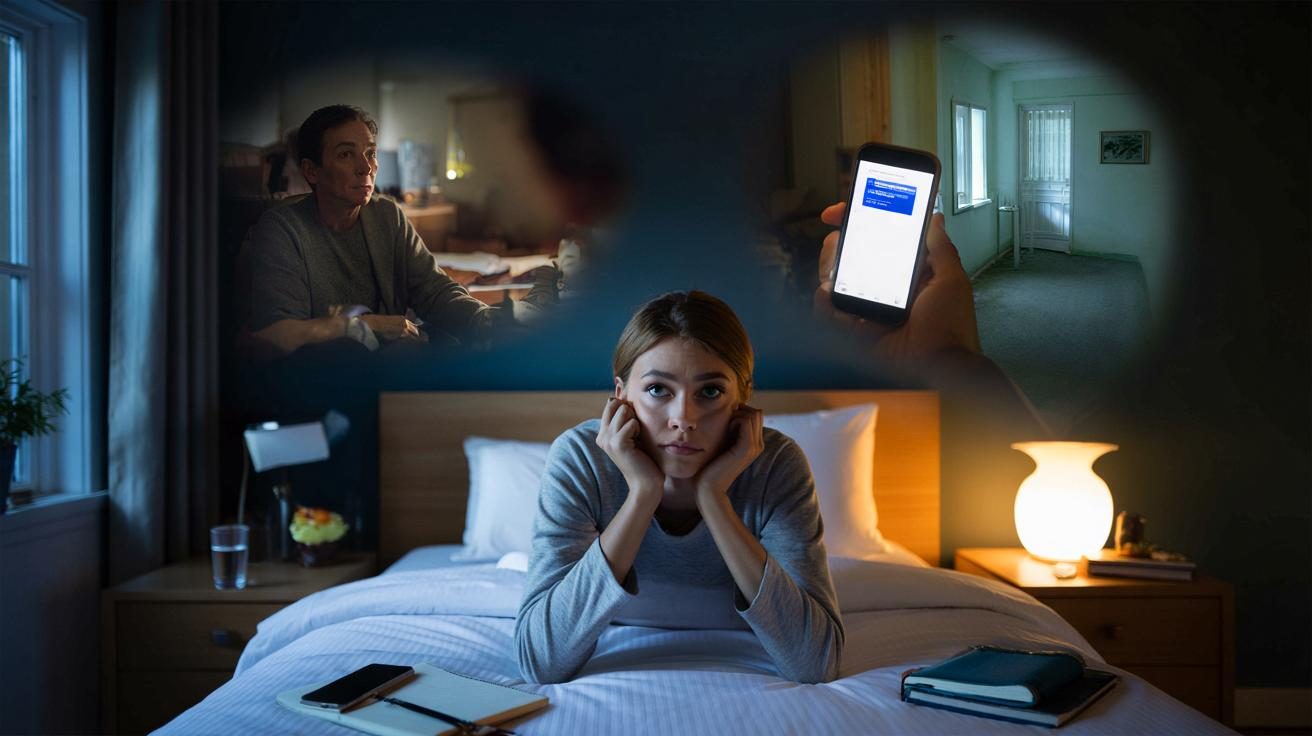
Your room is dark, your phone is finally on the nightstand, and the world has gone quiet. That’s when your brain decides it’s showtime. Every small awkward moment of the day suddenly replays in HD. An old breakup slides in, uninvited. A worry about money, a comment from your boss, that thing you said three years ago at a dinner party. Your body is exhausted, but your mind is wide awake, throwing scenes on an endless mental projector.
Some people call it overthinking. Psychologists often call it rumination.
And late at night, your brain has a very specific reason for doing it.
Why your brain starts “talking louder” when the lights go out
During the day, your mind is busy dealing with emails, notifications, traffic, family, the next meal, the next task. It doesn’t have much room to sit quietly with your feelings. At night, that noise drops. What’s left is you, your thoughts, and all the emotions you postponed.
So the brain does what the brain does best: it starts sorting. It replays scenes, rewrites dialogues, rewinds to tiny details. This mental rewind often feels annoying, but it’s actually a sign that your emotional system is trying to file what stayed unresolved.
Picture a woman lying in bed at 1:47 a.m., staring at the ceiling. She keeps seeing a moment from her afternoon: a colleague interrupting her in a meeting. At the time, she smiled, stayed polite, moved on. Now her chest feels tight. She imagines what she “should have said”. Then she shifts to a text from a friend she never answered. Then to a medical exam she’s been postponing.
None of these thoughts are random. Her brain is quietly flagging all the “open tabs” of the day and the week. The ones she never really felt through.
Psychologists explain that overthinking at night is closely linked to emotional processing in several brain networks, especially the default mode network — the system that kicks in when we’re not focused on an external task. That network loves unresolved stories.
When emotions aren’t fully processed during the day, they don’t disappear. They get stored as unfinished business, and the brain tries to integrate them during quiet periods, like night-time. So the overthinking isn’t just stress being dramatic. It’s a processing attempt that gets stuck in loops because there’s no clear outlet, no action, no real emotional release.
From chaos to processing: turning night overthinking into something useful
One simple, almost boring method changes the entire picture: a nightly “emotional download” before bed. Take five minutes with a notebook or notes app and write three tiny things: what happened, what you felt, what you actually needed in that moment. Not a novel, just a few lines.
This gives your brain the message: “I’ve seen this, I’ve named it.” Once an experience is named and acknowledged, the emotional load drops. The brain doesn’t need to keep replaying it in the dark.
Most people try to fight night overthinking with force. They scroll, binge-watch, drink, or repeat “don’t think about it, don’t think about it” like a spell. That usually backfires. The more you push thoughts away, the more they press back.
We’ve all been there, that moment when you’re begging your mind to shut up and, somehow, it gets even louder. Instead of fighting, treating the thoughts like signals — not enemies — often softens their intensity. Your brain is not attacking you. It’s trying, clumsily, to help you process what hurt, confused, or scared you.
“Rumination at night often reflects unfinished emotional business from the day. The mind is looping because it hasn’t yet found a narrative that feels safe enough to rest.”
— clinical psychologist’s explanation shared in a sleep therapy group
- Ask “What am I really feeling?”
Not just “I’m stressed” but “I felt ignored / ashamed / scared.” Naming emotion calms the nervous system.
- Give your brain a next step
Write one tiny action for tomorrow: send the message, book the appointment, prepare one sentence for that hard conversation.
- Create a “worry slot” earlier
Set 10–15 minutes in the early evening just to write worries and possible responses. Let’s be honest: nobody really does this every single day. But even once or twice a week can reduce the 2 a.m. spiral.
Letting the night show you what your day tried to hide
Night-time overthinking isn’t just a nuisance. It’s a map. It points to patterns, fears, desires, and boundaries you’ve been stretching for too long. That argument you keep replaying might be revealing a value you’ve been betraying. That mistake you can’t drop might be tied to a perfectionism you never chose consciously.
Sometimes the kindest move is not to “stop overthinking”, but to listen just long enough to understand what wants to be resolved — then bring that work into the daylight, where your brain has more tools than just replay.
Key point Detail Value for the reader
Night overthinking is emotional processing The brain replays unresolved moments when external stimulation is low Reduces shame and fear by giving a clear explanation for the mental noise
Labeling emotions before bed helps Short “emotional download” shifts rumination into organized processing Gives a practical, doable ritual to ease sleep and calm the mind
Thoughts signal unmet needs Repetitive scenes highlight boundaries, fears, or needs ignored during the day Transforms overthinking into insight for personal change
FAQ:
-
Question 1Is night overthinking a sign of anxiety or just normal processing?
-
Answer 1It can be both. Occasional overthinking at night is a normal way for the brain to process emotions. If it’s constant, distressing, and affecting daily life, it may be linked to anxiety and worth discussing with a professional.
-
Question 2Why do past memories pop up when I’m trying to sleep?
-
Answer 2Old memories often contain emotions that were never fully felt or understood. In the quiet of the night, the brain has space to revisit them, trying to integrate those experiences into a coherent emotional story.
-
Question 3Does scrolling on my phone actually make overthinking worse?
-
Answer 3Often yes. The light and constant stimulation keep your nervous system activated. That delays real emotional processing, so when you finally put the phone down, the mental storm can feel even stronger.
-
Question 4Can journaling really calm my mind that quickly?
-
Answer 4For many people, even a few lines of honest writing reduce intensity. The goal isn’t to write perfectly, but to tell your brain: “This has been noticed.” That simple act can lower the need for endless mental replay.
-
Question 5What if overthinking at night feels completely out of control?
-
Answer 5If thoughts are racing, you feel panicky, or sleep is consistently broken, that’s a sign you don’t have to handle this alone. Therapies focused on anxiety, trauma, or insomnia can teach your brain new, safer ways to process emotions.