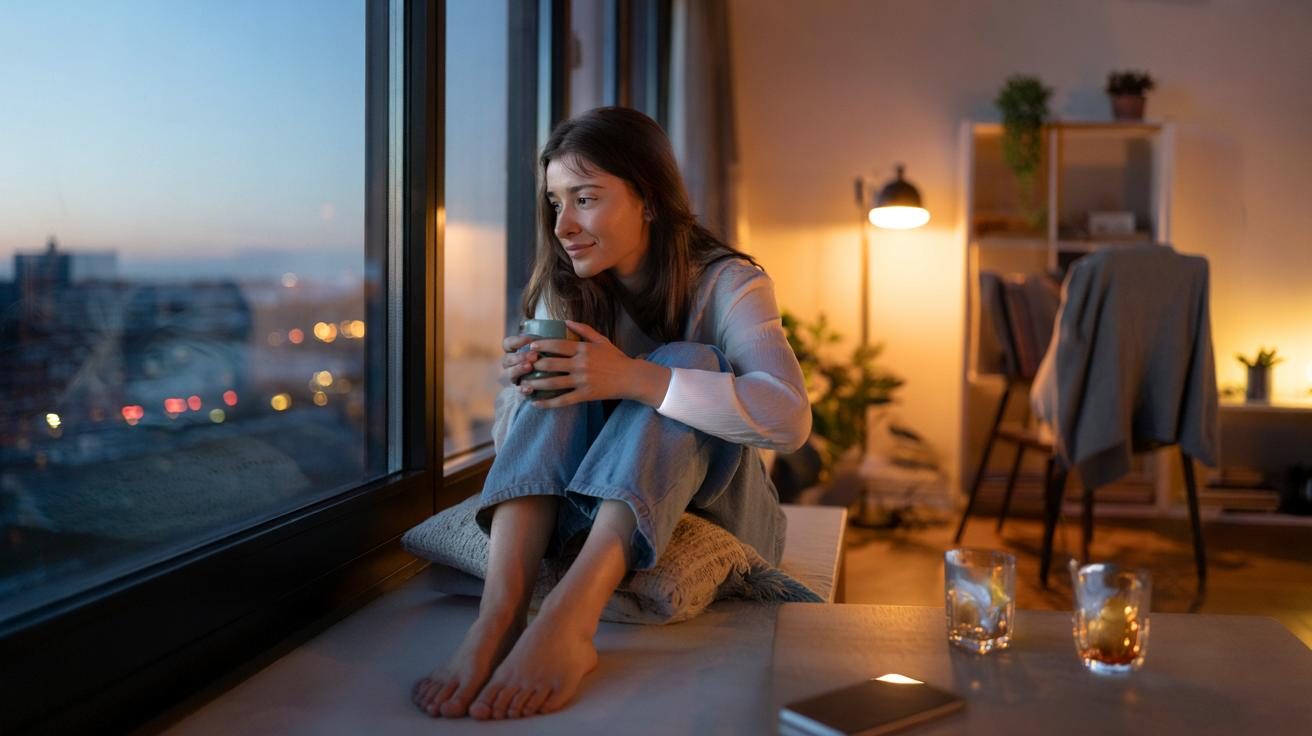
The party had only started thirty minutes ago, and Lena was already in the bathroom pretending to “check her makeup.”
Outside the door, music thumped, people laughed, glasses clinked. Inside, she leaned against the sink, scrolling aimlessly, waiting for her nervous system to cool down. Her friends thought she was shy, or in a mood, or “just not into people.”
She knew that wasn’t true. She loved her friends. She loved deep, late-night conversations and unexpected kindness from strangers.
She just needed a minute.
Psychology has a name for what she was doing.
And it changes the whole story.
Why choosing solitude doesn’t mean rejecting people
Scroll through social media and you’ll see it: memes about “cancelled plans” being the best gift ever, jokes about people who would rather stay home with headphones than go out to bars.
We laugh, but behind those images there’s something very real happening in our nervous systems.
For many people, especially introverts or highly sensitive personalities, social time is like a workout. Beautiful, meaningful, sometimes exhilarating, but still a strain on mental muscles.
They’re not anti-social. They’re just paying the energy bill that other people don’t notice.
Picture this.
You spend the entire day at the office, constantly “on”: chatting with colleagues, answering messages, sitting in meetings under fluorescent lights. After work, you drag yourself to a birthday dinner because you said you would.
By the time dessert arrives, your smile feels a little glued on.
Nothing bad happened. Nobody offended you. Yet your brain is buzzing and every extra word from the table feels like another notification you can’t turn off.
A 2017 study from the University of Helsinki linked high social stimulation with increased fatigue in introverted people. Not sadness, not rejection of others. Just plain exhaustion.
Like a phone that’s been running too many apps all day.
Psychology describes this using the concept of arousal: the level of stimulation in your brain and body.
Extroverts tend to start lower on that arousal scale, so social contact brings them up to a comfortable zone. The more, the better, for a while.
Introverts and lone-preferrers often begin much closer to the top. Every conversation, every noise, every decision pushes them closer to overload.
Solitude then acts like a reset button, letting arousal drop to a level where thinking becomes clear again.
So when someone ducks out of the group chat or chooses a solo walk, they’re not fleeing from humanity.
They’re quietly bringing their nervous system back online.
How to recharge without feeling guilty or misunderstood
One simple method changes everything: naming what you’re doing.
Instead of saying “I can’t” or faking an excuse, try sentences that frame solitude as refueling.
“I’d love to come, but I really need a recharge night.”
“I’m going to take an hour alone so I can be present later.”
This tiny shift is powerful.
It tells your brain that your need is valid, not a defect. And it tells other people you’re not rejecting them, you’re refilling your tank so you can show up better next time.
The big trap is waiting until you’re completely drained before you step away.
That’s when you start snapping at people you care about, ghosting chats, or cancelling at the last minute with a weird excuse that doesn’t sound like you.
We’ve all been there, that moment when you say “yes” to three social events in a row and then wonder why you feel mysteriously sick on the third night.
Let’s be honest: nobody really does this every single day.
A kinder approach is to plan tiny recovery pockets into your week: a solo coffee, a quiet commute without podcasts, ten minutes on a park bench between appointments.
These small breaks create a steady rhythm instead of a crash.
“Solitude is not the absence of love, but its preparation,” wrote the psychologist Anthony Storr, who spent years studying why being alone can actually strengthen emotional life rather than weaken it.
- Reframing alone time
Call it “recharging” or “resetting” instead of “hiding” or “being antisocial.” The words you use affect how guilty you feel.
- Setting gentle boundaries
I’ll come for a drink, but I’ll leave early to rest. This kind of sentence respects both your limits and the relationship.
- Reading your own signals
Headaches after social events, irritability, zoning out mid-conversation: these are not personality flaws, they’re early battery warnings.
Rethinking what it really means to “like being alone”
Once you start seeing solitude as energy management instead of withdrawal, everyday scenes look different.
The colleague who eats lunch alone with a book might not be lonely at all; they might be building up the strength to be kind all afternoon.
The teenager who closes their bedroom door after school could be processing a noisy day of teachers, friends, and constant expectations.
The partner who needs half an hour of silence after work might be getting ready to listen more fully later in the evening.
This perspective doesn’t magically erase misunderstandings. Some people will still take it personally when you decline an invitation or leave early.
Yet something inside you softens when you know the real story of your own behavior.
Key point Detail Value for the reader
Solitude restores energy Time alone reduces mental arousal and social fatigue Helps you feel less guilty about needing space
Clear language changes reactions Explaining you’re “recharging” reduces misunderstanding with others Protects relationships while honoring your limits
Early signals matter Noticing irritation, headaches, or zoning out prevents burnout Supports better emotional balance and more authentic presence
FAQ:
-
**Is preferring to be alone a sign of depression?**Not automatically. Depression usually brings loss of pleasure, hopelessness, and a heavy emotional fog. Choosing regular, satisfying alone time, then enjoying people again after, points more to energy management than illness.
-
**Can extroverts also need solitude to recharge?**Yes. Extroverts often refuel through people, but even they hit limits. Many feel best with a mix: high social time balanced by short solo breaks to process and rest.
-
**How do I explain this need to friends without hurting them?**Be specific and warm: “I love spending time with you, and I’m at my limit tonight. If I rest now, I’ll be more myself next time.” That separates your need from their value.
-
**What if my family thinks I’m rude or distant?**Try framing it as a way to reduce conflict: “When I get a bit of quiet time, I’m less snappy and more patient.” Over time, consistent behavior often convinces more than arguments.
-
**When should I worry about liking solitude “too much”?**If you stop wanting any contact, lose interest in hobbies, or feel numb rather than peaceful when alone, that’s a signal to talk to a mental health professional. Solitude should feel restorative, not like disappearing.